SKIP TO CONTENT

info@nenasf.org
508-754-2671

NENASF FALL WEBINAR SEPTEMBER 2025

Date: September 19, 2025
Category: Chapter News, Events, NASF Chapters, Regulation

New England Chapter of NASF Logo

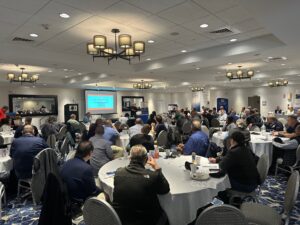
The New England Chapter once again was pleased to offer a Wastewater Continuing Education Webinar for the benefit of our membership, and open to  the entire metal finishing community. The event took place on Wednesday September 17, 2025 from 10:00am to 12:00pm. This educational webinar was offered at no charge to NENASF members as a benefit of Chapter membership.

Almost forty attendees from the metal finishing community were in attendance.


As was the custom, the program was comprised of three speakers offering vital technical and regulatory compliance information key to the metal finishing community. All attendees were eligible for two Wastewater Continuing Education Contact Hours awarded by the Mass DEP.


Brock Helton, the Preventive Maintenance Manager from Crossair, LLC gave the opening presentation. His focus was on the latest exhaust fan and fume scrubber technologies with an emphasis on proper preventive maintenance to keep these units running properly to achieve peak compliance results.

This was followed with a presentation by John Tracy, VP of Global Business Development from Aclarity, who offered a presentation on the current very fluid regulatory climate on PFAS wastewater discharge regulations. John  offered a unique remediation solution to PFAS removal in waste water through the use of electrochemical destruction.

The final speaker was Brittany McKinney from PAVCO who addressed the attendees on the benefits of various Trivalent Chrome Plating options as a replacement for traditional Hexavalent Chrome Plating processes that are currently in the cross hairs of regulatory agencies throughout the country.


The NENASF Chapter wants to once again thank our presenters for their time and expertise offered in an effort to enhance the knowledge and awareness of the metal finishing community. Also, many thanks to the dedicated NENASF members who work so hard to make educational events like this possible.

Major Development – EPA is No Longer Advancing a New Rulemaking Process for the Chromium Electroplating Air Toxics Rule

Date: June 28, 2025
Category: NASF National, Regulation


June 2025


Major Development – EPA is No Longer Advancing a New Rulemaking Process for the Chromium Electroplating Air Toxics Rule: The agency is not expected to advance a new round of review for the chromium electroplating air toxics rule anytime soon. This is in line with NASF’s long-standing position in recent years and advocacy of “no further regulatory action” needed in federal air policy for chromium. The air rule, last updated in 2012, is long overdue for a required update under the Clean Air Act’s deadline provisions.


Regulatory Update – OSHA Heat Rule Gets Massive 3-week Hearing: In a series of hearings this month, OSHA is being urged to drop a proposed Biden rule to regulate heat injury and illness. The main theme emerging from employers nationwide is for the administration to scrap the rule altogether or go back to the drawing board and consider more flexible, performance-oriented approaches to addressing heat stress in outdoor and indoor workplaces.


Policy Change: What does EPA’s Reorganization Mean: Since January, significant changes have been underway at EPA regarding its organizational shape and size and its regulatory agenda. This has included regulatory freezes, staff reductions, budget cuts, curtailing certain staff communications and an ambitious deregulatory agenda. What are the next steps in the agency’s budget, deregulatory and reorganization effort?


Washington Forum, September 15-17, 2025: Join us for this year’s Washington Forum this fall which is scheduled to take place September 15-17, 2025 at the historic Willard Hotel in Washington, DC. Our keynote speaker and more details on the agenda will be forthcoming. Please make your plans to attend this key industry event.


See below for more details on these issues…


Major Development: EPA Now No Longer Advancing a New Rulemaking Process for the Chromium Electroplating Air Toxics Rule


NASF has had ongoing discussions with EPA on a wide array of rules, science and regulatory actions, including the pending federal air toxics rule for hexavalent chromium emissions from plating and finishing. The air rule, last updated in 2012, is long overdue for a required update under the Clean Air Act’s deadline provisions.


At this time, however, with the shifting priorities of the new administration and following many exchanges from NASF Government Affairs in recent years – including our argument reflected in EPA’s own data that the nation’s finishing industry has reduced hexavalent chromium emissions by 99.7 percent since 1995 – the agency is not expected to advance a new round of review for the industry anytime soon. This is in line with NASF’s long-standing position in recent years and advocacy of “no further regulatory action” needed in federal air policy for chromium.


EPA had initially planned to have a proposed rule moving into play by later 2025. There is not yet a new date for when EPA intends to reinitiate the technology review of this rule. In the meantime, we remain in regular communication with key EPA officials and will report on any new developments. If you have any questions or would like more information on this issue, please contact Jeff Hannapel or Christian Richter at jhannapel@thepolicygroup.com or crichter@thepolicygroup.com.


Safety & Health: OSHA in Middle of Hearings on Heat Injury and Illness Prevention Rule


OSHA is now in the middle of a series of hearings this month on a proposed rule – “Heat Injury and Illness Prevention in Outdoor and Indoor Work Settings” – which was a top priority of the Biden administration. With the Trump administration now in charge of OSHA, the agency’s leadership has not yet signaled publicly whether it will keep, change or drop the heat rule. In the meantime, the hearings have been intense with wide-ranging views in testimony from key employer groups, unions and other organizations.


The 2024 proposed heat standard would apply to all employers conducting outdoor and indoor work in all general industry, construction, maritime, and agriculture sectors where OSHA has jurisdiction. The standard would require employers to create a plan to evaluate and control heat hazards in their workplace. It would also clarify employer obligations and the many steps necessary to effectively protect employees from hazardous heat.


The goal of the agency’s pending action is to prevent and reduce the number of occupational injuries, illnesses, and fatalities caused by exposure to hazardous heat. Among the issues that have been raised at the hearing, however, is precisely HOW OSHA would achieve that in a manner that is not onerous, invasive and disruptive to businesses.


NASF continues to be supportive of the U.S. Chamber of Commerce position for industry, which was conveyed last week to OSHA by Marc Freedman, the Chamber’s Vice President of Workplace Policy, who noted that the rule would apply a highly prescriptive framework for facilities, would not adapt to regional and industry-specific realities and would indeed by highly disruptive to the workplace for manufacturers and others. OSHA is being urged to either drop the rule altogether or go back to the drawing board and consider more flexible, performance-oriented approaches to addressing heat stress in outdoor and indoor workplaces.


Policy Change: Major Reorganization at EPA, What Does it Mean?


Some have described the changes that have occurred this year on the federal level as fast and furious. Since January, significant changes have been underway at EPA with regard to its organizational shape and size and its regulatory agenda. This has included regulatory freezes, staff reductions, budget cuts, prohibitions on staff communications with external stakeholders, and an ambitious deregulatory agenda.


With new leadership, EPA has not only announced its intentions but is taking action to reduce the size and scope of the agency as well as the impact of its regulatory actions. The most recently proposed federal budget plan to Congress from the White House includes nearly a 55 percent budget reduction for EPA. The rather comprehensive deregulatory agenda has also been accompanied by proposed organizational changes to EPA that affects its regulatory priorities and how they impact the metalcasting industry. Some of the most recent developments are discussed below.


EPA Air Office Reorganization


Under EPA’s Air Office reorganization, the Climate Change Division, the Climate Protection Partnership, and other climate change functions currently housed in the Office of Atmospheric Protection (OAP) are being eliminated, signaling a shift in priorities away from climate change programs.


Moving beyond climate, the Office of Air Quality Planning and Standards (OAQPS) and the Office of Atmospheric Protection (OAP) itself would be abolished. OAQPS, which is currently responsible for approximately 80 percent of EPA’s air regulations, is being split into two new offices: the Office of Clean Air Programs (OCAP) and the Office of State Air Partnerships (OSAP). OCAP will implement the regulatory work required under the Clean Air Act (e.g., National Ambient Air Quality Standards (NAAQS) and National Emission Standards for Hazardous Air Pollutants (NESHAP)), and OSAP will handle approvals of state implementation plans (SIPs) and address air permitting issues (to support cooperative federalism efforts).


With the reorganization, EPA will reassign current staff to new positions within the agency, but staff reductions are expected as some OAQPS personnel were offered a second round of buyouts and are likely to leave the agency. Of course, uncertainty remains as the changes are now subject to a temporary restraining order (TRO) sought by environmental and labor groups that has been appealed to the U.S. Court of Appeals.


Even supporters of the air office reorganization have expressed concerns about the timing for the changes and how they may impact EPA’s ambitious deregulatory agenda. Keep in mind that even with the deregulatory push, EPA is a regulatory agency that will continue to issue regulations, many of which are required by statutes enacted by Congress over decades. Furthermore, deregulatory actions take time, require staff to implement the agenda, and need budget resources to support the effort. Deregulation does not necessarily come easily.


EPA Office of Research and Development


In addition, the Trump Administration plans to shutter the Office of Research and Development (ORD). Many ORD staff are expected to be reassigned to the Office of Chemical Safety & Pollution Prevention (OCSPP) to help with the risk evaluation of existing chemicals and the Office of Air and Radiation (OAR) to address backlog of air regulations statutory reviews. Additional ORD staff are slated to be sent to a new Office of Applied Sciences and Environmental Solutions (OASES) within the Office of the Administrator to “align research and put science at the forefront of the agency’s rulemakings and technical assistance to states.” Critics have warned that the closing of ORD is causing a science “brain drain” within the agency and that housing research functions within the administrator’s office will make it vulnerable to politicized micromanaging of science to support deregulatory conclusions.


Potential Impact of Staff Reduction and Reorganization


With reduced staff, ambitious timetables, and slashed budgets, EPA is now in the process of drafting proposed rules that will be subject to the notice-and-comment process of the Administrative Procedure Act (APA). This includes proposals to revise or rescind The Clean Power Plan, greenhouse gas (GHG) rules, air toxic standards, and NAAQS such as the PM2.5 rule, as well as reconsidering the GHG endangerment finding. Issuing proposed rules by the end of 2025 would be considered a significant accomplishment for EPA. It is an incredible workload in an incredibly short time frame for the current agency workforce.


All of this demonstrates the Trump Administration’s ongoing tension between meaningful regulatory reform and dramatically reducing the size and scope of the agency. EPA has moved from its regulatory review and evaluation stage to implementing its ambitious deregulatory plan. The success of the agency reorganization and the deregulatory agenda will play out over the next six months and beyond as EPA works diligently to issue new proposed rules to support its historic deregulatory agenda and meet its statutory requirements.


Throughout this process, the surface finishing industry will be presented with many opportunities and challenges to shape the regulatory landscape that impacts its operations. Next month, we will address water quality and effluent guidelines and the outlook for industry and finishing, including the still looming issues connected with PFAS. If you have any questions or would like more information on this issue, please contact Jeff Hannapel or Christian Richter at jhannapel@thepolicygroup.com or crichter@thepolicygroup.com.


Washington Forum, September 15-17, 2025


The Washington Forum will take place September 15-17, 2025 at the historic Willard Hotel in Washington, D.C. Please make your plans to attend this key industry event. Registration will be available shortly, and details on the agenda and keynote will be announced imminently.


Forum Topics and Speakers


The Forum will include presentations and briefings from national and global experts on pertinent policy, technical, regulatory, and management issues impacting the surface finishing industry, including speakers from EPA, DOD, the Nickel Institute, the U.S. Chamber of Commerce and other organizations.


In addition, Washington Forum participants also have the option during the event to meet with their congressional representatives and staff to educate them on the importance and impact of the surface finishing industry, the challenges facing companies across key sectors and regions, and specific policy priorities of concern.


We look forward to seeing you at the Washington Forum this year. If members have questions or would like additional information about the Washington Forum, please contact Jeff Hannapel or Christian Richter with NASF at jhannapel@thepolicygroup.com or cichter@thepolicygroup.com.


NASF 1000


The NASF 1000 program was established to ensure that the surface finishing industry would ‎have resources to effectively address regulatory, legislative and legal actions impacting the ‎industry, NASF members and their workplaces. All funds from the NASF 1000 program are used ‎exclusively to support specific projects and initiatives that fall outside the association’s day-to-‎day public policy activities. The commitment to this program is one of the most vital ‎contributions made in support of surface finishing and directly shapes the future of the ‎industry. ‎


The sustained commitment from industry leaders has helped the NASF remain strong and ‎credible in informing regulatory decisions across the nation. Specific projects funded through ‎the NASF 1000 make a measurable difference in how the industry navigates emerging ‎challenges, communicates credibly with policy makers, and advocates for a strong science base ‎for rules or standards that affect surface finishing. ‎


Please consider supporting the NASF 1000 program. For more information, contact: Christian Richter (202-257-‎‎0250) or Jeff Hannapel (202 257-3756) with NASF.‎


Public Policy Report – May 2025

Date: May 31, 2025
Category: Events, NASF National, Regulation


See You at SUR/FIN! NASF Government and Industry Affairs Presentation on Thursday, June 5 @ 9:00 – 10:00 AM


It has been a historic year in 2025 on the public policy front with the many changes underway in Washington and beyond. With new faces at the agencies, historic changes underway across the federal government and new challenges emerging on metals and minerals, regulation, tariffs, defense and manufacturing competitiveness, there has been much on the agenda.


To keep members informed and hear your questions and concerns, we’ll look forward to seeing you and presenting the NASF Public Policy Update on Thursday, June 6 @ 9:00 – 10:00 am CT on the show floor stage.


We will be covering a number of topics and providing updates on major issues that impact the industry. We’ll also be available to answer questions all week as well.


In the meantime, see some of the latest developments this month below.


See you in Rosemont!


Federal Nickel Toxics and Exposure Profile Removed for Further Agency Review


The Agency for Toxic Substances and Disease Registry (ATSDR) has temporarily removed its recently finalized Nickel Toxicological Profile and related nickel documents from its public webpage. The agency, which operates under the Centers for Disease Control, states that it is now evaluating earlier health calculations associated with its final publication for nickel several months ago.


The ATSDR’s final Nickel Toxicology Profile, which it developed over several years and published in November 2024, raised major concerns for NASF and other sectors. Among the more problematic issues was its extremely conservative approach to human exposure in its calculations, which were not aligned with other authoritative health, scientific and regulatory bodies. Because the ATSDR profiles are considered the “gold standard” for regulators and public health agencies across the U.S. and worldwide, the final profile would drive significant changes to nickel regulation for industry.


NASF will keep members apprised of any new developments on this issue.


REMINDER: NASF Automotive Roundtable Webinar Recording Available to Members on Trivalent Chromium and PFAS Transition


NASF members can view the webinar recording of the association’s recent trivalent chromium webinar, developed in collaboration with the Detroit-based Automotive Industry Action Group (AIAG). For the past three years NASF has been collaborating with the Automotive Industry Action Group (AIAG), automotive OEMs, chemical suppliers, and finishing applicators to trivalent chromium coatings in the automotive supply chain.


Among the highlights of the webinar, which features a dozen panelists and a Q&A session from the automotive, supplier and plating community, were key remarks by industry colleagues from Toyota and General Motors, who reviewed emerging policies and timelines for transition from hexavalent to trivalent chromium for decorative plating and chromic acid etch, as well as eliminating PFAS in the supply chain.


NASF and AIAG have plans to continue the initiative and expand the discussion into 2026 on emerging OEM timelines, practical challenges and further opportunities for coordination.


If members have further questions or would like additional information on the project and outlook, please reach Christian Richter at crichter@thepolicygroup.com or Jeff Hannapel and jhannapel@thepolicygroup.com .


NASF Coordinates with Industry Allies in Response to White House Request for Deregulatory Action


In response to a White House request for information on areas that would benefit from deregulation, NASF coordinated this month with key manufacturing allies to urge the administration to rescind EPA’s August 2024 assessment for hexavalent chromium. The White House Office of Management and Budget requested suggestions for “regulations that are unnecessary, unlawful, unduly burdensome, or unsound.”


An existing federal court order requires EPA to revise the current U.S. drinking water standard for chromium within three years once EPA’s scientific assessment is completed. However, NASF and several other trade associations agree with EPA’s own Science Advisory Board that the document contained significant and consequential deficiencies which were never addressed prior to agency’s final action. As a result, EPA’s conclusions could likely lead to a drinking water value below average background levels, with costs to municipal drinking water systems as well as industry reaching $20 billion over time with little to no public health benefit.


NASF was joined by the Specialty Steel Industry of North America, the Industrial Fasteners Institute, the National Tooling and Machining Association, the Precision Machined Products Association, the Precision Metalforming Association and the Plumbing Manufacturers Institute.


NASF Calls for EPA to Withdraw Pending Federal Stormwater Permit Rule for Industrial Discharges


NASF has been closely engaged in EPA’s industrial stormwater discussions, and recently joined with the U.S. Chamber of Commerce to urge that agency to withdraw its December 2024 proposed Multi-Sector General Permit (MSGP) for industrial stormwater discharges. The proposal was included in the Biden administration’s last tranche of regulatory actions and deadlines for the agency before the inauguration.


Among the issues raised particularly for small business were the potential for significant costs and unintended consequences for facilities nationwide, including the proposed inclusion of PFAS in the monitoring requirements for rule. In broader comments to the agency, the industry recommended that EPA:

  • provide evidence that metal finishing and others significantly impacting stormwater discharges;
  • disclose the data it used to justify proposed PFAS reporting; and
  • consider the total costs of monitoring and sampling.

NASF and others are urging EPA to delay PFAS monitoring in the stormwater permit rule renewal until more information is available and an appropriate dialogue with industry is convened.


EPA Advancing on New Plan to Address PFAS


EPA has been taking next steps on PFAS policy since agency chief Lee Zeldin recently released a widely anticipated outline to address PFAS contamination that, unlike other environmental policy announcements, maintains many of the priorities from the Biden Administration, albeit with a shift in emphasis. EPA’s PFAS actions will fall under three broad categories:

  • strengthening science;
  • fulfilling statutory obligations; and
  • enhancing communication and building partnerships.

The development of effluent guideline limitations (ELGs) for metal finishing was included in the list of PFAS actions that EPA plans to address and was expected based on our ongoing discussions with the agency.


Zeldin’s announcement reflects his longstanding advocacy on PFAS from serving his Long Island district in Congress, including support for funding local communities’ cleanup of PFAS-contaminated water systems and promoting the need for a “polluter pays” model for PFAS contamination. He has expressed interest in working with Congress to exempt only “passive receivers,” like POTWs, drinking water agencies, local governments, and farmers, from bearing the costs for PFAS remediation pursuant to Superfund.


The agency has also stated that it is exploring better ways to use RCRA authorities to address PFAS contamination rather than Superfund. In addition, EPA is actively evaluating how to provide relief and more feasible compliance with the PFASA drinking water standard for drinking water providers.


EPA still intends to designate a PFAS lead official to help align and manage the broad array of PFAS efforts across different agency programs. NASF will continue to actively engage on these issues at both the federal and state level and provide updates to NASF members on critical developments. If you have any questions or would like ‎additional information regarding EPA’s new PFAS strategy or its potential impacts on the surface finishing industry, please contact Jeff Hannapel or Christian Richter with NASF at jhannapel@thepolicygroup.com or crichter@thepolicygroup.com .


NASF 1000


The NASF 1000 program was established to ensure that the surface finishing industry would ‎have resources to effectively address regulatory, legislative and legal actions impacting the ‎industry, NASF members and their workplaces. All funds from the NASF 1000 program are used ‎exclusively to support specific projects and initiatives that fall outside the association’s day-to-‎day public policy activities. The commitment to this program is one of the most vital ‎contributions made in support of surface finishing and directly shapes the future of the ‎industry. ‎


The sustained commitment from industry leaders has helped the NASF remain strong and ‎credible in informing regulatory decisions across the nation. Specific projects funded through ‎the NASF 1000 make a measurable difference in how the industry navigates emerging ‎challenges, communicates credibly with policy makers, and advocates for a strong science base ‎for rules or standards that affect surface finishing. ‎


Please consider supporting the NASF 1000 program. For more information, contact: Christian Richter (202-257-‎‎0250) or Jeff Hannapel (202 257-3756) with NASF.‎


NENASF ANNUAL HAZMAT and WASTEWATER SEMINAR 2025

Date: May 13, 2025
Category: Chapter News, Events, Member News, NASF Chapters, Regulation

The attendance was great as over thirty-five members NASF New England Chapter, along with members of the metal finishing community as a whole, attended a Seminar sponsored by the Chapter on May 7, 2025 at the Courtyard Marriott in Marlborough, Massachusetts. The event was primarily a training session enabling attendees to receive their mandatory annual RCRA HazMat. The four-hour Seminar also included speakers on wastewater effluent management and plating rectifier selection as a means of achieving plating success with minimal environmental disruption.

The instructor for the two-hour RCRA Hazmat segment of the Seminar was David Webster, Environmental Health and Safety Project Manager for HRP Associates out of their Farmington, Connecticut office. This two-hour session was a very detailed and intense training exercise with strong emphasis on possible pitfalls of incorrect hazardous waste handling and documentation, and was concluded with a written competency test prior to awarding of Certificates of Completion by HRP Associates for the RCRA Training.

Rob Sheldon of Aquasgroup in East Providence then offered a presentation about rinse water management, and how Zero Limit Discharge (ZLD) could be viewed as the future of metal finishing. He tied that into efficient equipment design, such as doing what can be simply achieved to initially minimize rinse water contamination, and the rewards of this approach in solving potential discharge challenges.

The afternoon Seminar was concluded with a presentation by Dev Massimi of American Plating Power who gave a presentation on the review process necessary when purchasing a new plating rectifier. This segment focused on factors to consider such as technologies available, degree of protection, ripple, correct sizing and control methods, to name a few. A power source that efficiently produces quality product can mean less chance for rejects. Reject rework can add additional unnecessary strain on wastewater discharge systems.

This Seminar, which was offered at no cost to the NENASF members, along with other events and educational opportunities offered by the New England Chapter, are just another reason to join and actively participate in all that local Chapter membership in the National Association for Surface Finishing has to offer. Thanks to all participants for allowing events like this to happen.

NENASF 2025 SPRING WEBINAR

Date: March 26, 2025
Category: Chapter News, Events, NASF Chapters

New England Chapter of NASF Logo


In keeping with the core values of The New England Chapter of The National Association for Surface Finishing, the Chapter was, once again, pleased to host a virtual Wastewater Continuing Education Webinar for the benefit of our membership, and the entire metal finishing community. The event was offered via Zoom format, at no charge to NENASF members, over a two-hour period from 10:00 am to 12:00 pm on Wednesday March 19, 2025.

This continuing education program was comprised of three speakers, and offered vital technical and regulatory compliance information to the metal finishing community. Attendees also qualified for two Continuing Education Wastewater Treatment Contact Hours as awarded by the Mass DEP, to be used towards Wastewater license renewal.

Dr. Bob Fan of Buck Scientific opened the Webinar with a presentation on the use of Atomic Absorption Spectrophotometry as, not only a wastewater discharge compliance tool, but also as an aid in process quality realization leading to less impact on a company’s wastewater treatment system.

This presentation was followed by a joint presentation by Robin Deal and Jeremy Morgan of Hubbard-Hall on Wastewater Treatment Operator responsibilities and training opportunities. This talk centered on balancing technical ability with wastewater operator licensing requirements, and interaction with plant processes and regulatory sewer authorities.

The closing speaker was Brian Morrill of GZA Geo Environmental whose presentation centered on the newly proposed modification to Commercial, Industrial and Institutional (CII) Multisector Stormwater General Permit (MSGP).

As many as 3000 properties that are currently exempt may now be included.

Quarterly PFAS stormwater testing could become a mandatory requirement.

Thank you to all of the Speaker Facilitators for their time, expertise and overall contribution to making this educational opportunity available to the metal finishing community. Special thanks, once again, to Chris Capalbo as Program Moderator and all NENASF Board Members, Committee Members, Chapter Membership and dedicated and talented members of the Metal Finishing Community as a whole for making events such as this available for the benefit of our membership.  Over three dozen members of the NENASF and metal finishing community were in attendance and benefited from this program.

In Memoriam – George Abelli

Date: March 20, 2025
Category: Chapter News, Member News, NASF Chapters, Obituaries

George Abelli

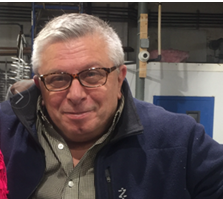
It is with sadness that we, the staff of F.M. Callahan & Son, must report the news that our beloved co-worker, George Abelli, has suddenly passed away. George, with his broad knowledge of metal finishing, has been a core contributor to our success over the past few decades. He served our clients well, providing them valuable insight into how their parts can be treated to enhance their performance over a long period of time. George spoke often to clients on the phone and was a subject matter expert when clients visited our facility. He will be dearly missed, not just for his expertise, but also because he was our friend.


Your friends at F.M. Callahan & Son

NASF POLICY UPDATE – JANUARY 2025

Date: February 1, 2025
Category: NASF Chapters, NASF National, Regulation

Since Inauguration Day, the Trump administration has launched an aggressive agenda aimed at rolling back key Biden-era decisions and advancing immediate changes across multiple fronts with potentially far-reaching impacts. As anticipated, the White House has taken actions or announced plans through more than two dozen executive orders and presidential memoranda, ranging from border security and immigration, trade and tariff policy, energy, environment and workplace regulations and resizing the federal bureaucracy.


Regulatory Freeze


The White House has also imposed a regulatory freeze on the issuance of both proposed and final rules across the agencies to allow senior political appointees to move into their new roles and engage in a broad review of federal rulemaking. NASF is closely monitoring offices at key federal agencies, including emerging personnel changes and announcements that impact the finishing industry.


Senate Confirmations


On Capitol Hill, the Senate acted to confirm the president’s appointments to several departments in recent days, including Homeland Security, Treasury, Department of Defense. The U.S. Senate also confirmed former New York congressman Lee Zeldin as the new EPA Administrator on Wednesday, January 29, 2025.


Tariffs on Canada and Mexico Could Come on February 1: President Trump on Thursday, January 30 announced he will impose 25 percent tariffs on Canada and Mexico beginning on Saturday, February 1, and highlighted his continued concerns over illegal migration, fentanyl and trade deficits as threats to the U.S. that must be addressed.


The Trump administration has been in ongoing discussions with Mexican and Canadian officials, with both countries preparing retaliation if the White House follows through on its plans.


The American Automotive Policy Council (AAPC), which represents Ford, GM and Stellantis, noted that the U.S. auto sector would be hit hard by the duties, and stated this week that cars and parts which meet the US-Mexico-Canada Agreement (USMCA) rigorous rules of origin should be exempt from any new tariffs.


“If these tariffs are imposed, all vehicles and parts that comply with current USMCA trade agreement rules should be exempt, as they meet the strict standards originally negotiated by President Trump to support jobs and investment in the United States,” Governor Matt Blunt, President of the AAPC, said this week.


During his Senate confirmation hearing on January 29, President Trump’s nominee for Commerce secretary, Howard Lutnick, said that Canada and Mexico were making progress on border security and other issues and could possibly avoid the tariff threat.


NASF Trivalent Chromium Coatings Transition Virtual Event with the Automotive Industry Action Group: The National Association for Surface Finishing is planning a virtual panel discussion and update on March 18 from 2:00 – 4:00 pm ET on key industry and regulatory developments in the transition from hexavalent to trivalent chromium coatings in the automotive supply chain.


NASF and Automotive OEM collaboration


In collaboration with the Automotive Industry Action Group (AIAG), the leading organization representing the automotive supply chain, NASF will host OEM, plating and supplier leaders on AIAG’s Electroplating Workgroup to discuss the direction of OEM efforts to voluntarily reduce and eliminate hexavalent chromium for decorative applications.


Industry Survey and Outreach


NASF and AIAG in 2024 conducted an industry survey and outreach across the supply chain to ensure the Electroplating Workgroup and OEMs gained a more in-depth understanding of industry capabilities, complexities and challenges to voluntarily eliminate hexavalent chromium in decorative electroplating as well as chromic acid etch. The workgroup also reached out to Tier 1 organizations last fall to discuss recent trends, outlook and industry needs.


Event Registration


NASF will be sending out an invitation to register as the landscape in 2025 continues to evolve on the transition from hexavalent to trivalent plating and coatings.


If you have any questions or would like more information about the webinar or NASF’s collaboration with the Automotive Industry Action Group, please contact Christian Richter or Jeff Hannapel with NASF at  or .


Newly Proposed Federal Stormwater Permit Targets Finishers and Other Sectors for PFAS: In one of the Biden administration’s final regulatory actions, EPA published its proposed 2026 multi-sector general permit (MSGP) for stormwater discharges from industrial activities. When finalized, the 2026 MSGP would replace the 2021 MSGP that expires on February 28, 2026.


Additional Facility Monitoring Requirements


The proposed 2026 MSGP includes additional monitoring requirements such as quarterly indicator monitoring for PFAS. The PFAS monitoring would be for reporting purposes only, and facilities would not have to implement any control measures for PFAS at this time. It is, however, likely that based on monitoring results such control measures for PFAS in stormwater discharges would be required in the near future for many facilities.


The 2026 MSGP would also modify actions required for other contaminants for the additional implementation measures (AIM) that were included for the first time in the 2021 MSGP. Facilities that exceed monitoring thresholds for benchmark substances would be required to submit AIM reports to regulatory agencies identifying the reasons for the exceedances.


Potential Impacts Nationwide


While the MSGP is only binding in three states (those without authorized Clean Water Act programs), most states use the provisions in the MSGP as a model for their stormwater regulations. The proposed changes to the MSGP could have significant impact on stormwater discharges from surface finishing operations. Comments on the proposal are due February 28, 2025.


As the Trump administration reviews the rule, NASF will continue to work with regulators and industry stakeholder on the proposed changes to the MSGP. If you have any questions regarding the MSGP, please contact Jeff Hannapel or Christian Richter with NASF at  or .


EPA’s New Effluent Guidelines Program Plan: Focus on Surface Finishing: In another late issuance from the Biden administration, EPA released its Preliminary Effluent Guidelines Program Plan 16 (Preliminary Plan 16) on December 16, 2024. It identifies the Agency’s efforts to study and develop technology-based limits on industrial wastewater discharges.


Latest Conclusions for Surface Finishing and PFAS


The document highlights the agency’s latest views on surface finishing and PFAS, as follows:

  1. PFAS-free fume suppressants are now available; 
  2. Many facilities could switch to trivalent chromium;
  3. A number of facilities are successfully using granular activated carbon for PFOS and it may be effective for other PFAS wastewater treatment;
  4. Other technologies may be available, including membranes, ion exchange and PFAS destruction techniques.

Members should bear in mind that the Trump administration’s EPA leadership will not likely reverse or rescind the latest Plan 16 but will review these conclusions for the metal finishing industry as the agency determines how to move forward on next steps in the metal finishing PFAS effluent guidelines rule.


NASF will continue to be deeply involved in discussions with EPA at all levels about what an appropriate path forward will be for the metal finishing PFAS effluent guidelines proposed rule, which at this time is still scheduled for issuance in August 2026.


If you have any questions regarding EPA’s ELG program or Preliminary Plan 16, please contact Jeff Hannapel or Christian Richter with NASF at  or .


Trump EPA May Review Final Biden Chemical Rules for TCE, PCE and CTC: The Trump administration may review another late Biden administration regulatory action from a few weeks ago for three solvents: trichloroethylene (TCE), perchloroethylene (PCE), and carbon tetrachloride (CTC).


The December action either banned or phased out most, if not all uses of these chemicals. EPA gave some exemptions to the bans and phase outs to avoid impacts to national security or critical infrastructure and to allow reasonable time for transitioning to alternatives but finalized stringent controls for continuing uses under a Workplace Chemical Protection Program.


The impact of these and other ambitious rules may be minimized if the Trump Administration halts the implementation dates of pending rules.


NASF will continue to monitor developments in the wide range of ongoing actions in EPA’s existing chemicals risk management program now under new leadership. If you have any questions regarding these or other chemicals rules, please contact Jeff Hannapel or Christian Richter with NASF at  or .


NASF 1000


The NASF 1000 program was established to ensure that the surface finishing industry would ‎have resources to effectively address regulatory, legislative and legal actions impacting the ‎industry, NASF members and their workplaces. All funds from the NASF 1000 program are used ‎exclusively to support specific projects and initiatives that fall outside the association’s day-to-‎day public policy activities. The commitment to this program is one of the most vital ‎contributions made in support of surface finishing and directly shapes the future of the ‎industry. ‎


The sustained commitment from industry leaders has helped the NASF remain strong and ‎credible in informing regulatory decisions across the nation. Specific projects funded through ‎the NASF 1000 make a measurable difference in how the industry navigates emerging ‎challenges, communicates credibly with policy makers, and advocates for a strong science base ‎for rules or standards that affect surface finishing. ‎


Please consider supporting the NASF 1000 program. For more information, contact:  (202-257-‎‎0250) or  (202 257-3756) with NASF.‎

Proposed EV Rule Poses a Real Threat to Industry in Massachusetts

Date: December 6, 2024
Category: NASF Chapters, Regulation

Proposed EV Rule Poses a Real Threat to Industry in Massachusetts

Add Your Voice to those Opposing Implementation

Do you have a fleet of mid- and large sized vehicles registered in Massachusetts? Do you have one or two? Do you rely on a Massachusetts-based company to transport materials and products to and from your facility? If so, the proposed  Advanced Clean Truck (ACT) Rule, which is already decimating the trucking industry in Massachusetts, will have a major impact on your ability to conduct business.

Massachusetts law requires the state to adopt certain California emission standards in its drive to reduce greenhouse gasses. One of these California standards is the phase-out of diesel-fueled trucks in favor of Electric Vehicles.  MCTA has joined a coalition led by the Trucking Association of Massachusetts (TAM) and are doing everything in our power to create a sense of urgency and delay the implementation of ACT until availability, technology, and infrastructure catch up with the needs of our members.


MCTA and TAM  need your help too!  Environmental advocacy groups are weighing in big-time. We need our voices heard. Please spend two minutes completing this simple outreach form HERE to urge regulators and elected officials to act NOW. The form will automatically be customized and sent  to your delegation.

Two public hearings on the Emergency Regulations for the Low Emission Vehicle Program will be held on December 9th, the first at 1 pm and the 2nd at 5:30 pm. The deadline for comments is December 19th.

For additional information, contact Katherine Robertson@masscta.org

2024 New England Surface Finishing Regional – Cape Cod, Massachusetts

Date: November 12, 2024
Category: Uncategorized

NE Surface Finishing Regional Logo


The New England Surface Finishing Regional took place this past Friday November 8th in Hyannis, Massachusetts. It was a huge success with a 125 people in attendance. There were speakers from all over the country that delivered educational and thoughtful presentations to all in attendance.

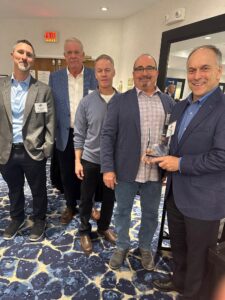
The New England Surface Finishing Regional is honored to have presented the 8th Annual Foundation Award to longtime supporter Hubbard-Hall. The award was created to recognize a metal finishing supplier that has demonstrated outstanding contributions, support, and dedication to the annual regional event.

The 2025 the New England Surface Finishing Regional will be held November 7th in Salem, Massachusetts.

Please continue to follow www.nenasf.org all year for news and events throughout the New England metal finishing industry.


NASF POLICY UPDATE

Date: October 23, 2024
Category: Chapter News, Events, NASF National, Regulation


October 2024


EPA Delays PFAS Proposed Rule for Wastewater Discharges from Surface Finishing ‎Operations: Key EPA Activities Ahead‎


We noted in recent weeks during the NASF Washington Forum and in association chapter ‎meetings that EPA’s schedule for the proposed rule to address PFAS in wastewater discharges ‎from surface finishing operations has been delayed from December 2024 until May 2026. EPA ‎is currently in the process of reviewing, evaluating, and analyzing the data from the surveys. In ‎addition, the agency must take additional key steps during this period, including:‎

  • conducting further follow up on survey responses;‎
  • completing site visits and onsite sampling for a small group of facilities;‎
  • reviewing industry discharge data and treatment technology options;‎
  • evaluating financial and economic data;‎
  • assembling a small business impact panel to assess potential impacts on small ‎operations; and
  • developing proposed rule language.‎

With respect to site visits, the agency plans to conduct single grab samples of wastewater at 20 ‎facilities and multiple samples at another five facilities. EPA does not expect to begin site ‎visits and sampling until after the first of the year. ‎


The NASF Government & Industry Affairs team continues to meet with EPA officials on these ‎and other developments in the PFAS wastewater discharge rule. If you have any questions ‎regarding EPA’s rulemaking for discharges of PFAS in wastewater from surface finishing ‎operations, please contact Jeff Hannapel or Christian Richter with NASF at ‎jhannapel@thepolicygroup.com or crichter@thepolicygroup.com. ‎


EPA Identifies 27 Candidates for “Priority” Selections Under Federal Chemicals Program: ‎Organics and 4 Metals Included


In a significant new development, EPA in late September named 27 candidate chemicals from ‎which they will choose five substances to “prioritize” under the Toxic Substances Control Act ‎‎(TSCA) for risk evaluation and ultimately regulation. The list included 10 chemicals that were ‎identified last year and 17 chemicals that were included for the first time. For the first time ‎ever, four metals were included on the candidate list: antimony, arsenic, cobalt and lead, and ‎their compounds. ‎


The 10 substances from last year are 4-tert-octylphenol [also known as (4-(1,1,3,3-‎tetramethylbutyl)-phenol)]; the high-profile plastic additive bisphenol-A (BPA); hydrogen ‎fluoride (HF); the anti-cracking chemical in vehicle tires known as 6PPD; styrene; benzene; ‎ethylbenzene; naphthalene; tribromomethane; and triglycidyl isocyanurate.‎


The 17 new candidates are 1-hexadecanol; 2-ethylhexyl 2,3,4,5-tetrabromobenzoate (TBB); ‎creosote; di-n-octyl phthalate (DnOP); n-nitroso-diphenylamine; p,p’-oxybis (benzenesulfonyl ‎hydrazide); m-xylene; o-xylene; n-xylene; antimony and antimony compounds; arsenic and ‎arsenic compounds; cobalt and cobalt compounds; lead and lead compounds; long-chain ‎chlorinated paraffins (C18-20); medium-chain chlorinated paraffins (C14-17); and bisphenol-S ‎‎(BPS).‎


Under TSCA, the existing chemicals EPA selects for its risk evaluation process must first go ‎through a “prioritization” process lasting nine to 12 months, where the agency considers ‎available data on uses, risks and other properties of the chemical or chemical group. The agency ‎then designates each as either high- or low-priority, and then must immediately begin risk ‎evaluations for high-priority chemicals. Based on the risk evaluation EPA will identify any ‎‎“unreasonable risks” associated with the use of the chemical, and propose regulations and ‎management options to address those risks.‎


This year EPA also decided to release the candidate list in a more public forum and has ‎promised to expand public input and data-gathering in the pre-prioritization process, including a ‎public comment period. Last year, EPA released 20 candidates for TSCA review only at ‎closed-door stakeholder meetings and faced complaints over the process from environmental ‎and industry groups not invited to those sessions. ‎


If you have any questions regarding EPA’s candidate list or the TSCA risk evaluation process ‎for existing chemical, please contact Jeff Hannapel or Christian Richter with NASF at ‎jhannapel@thepolicygroup.com or crichter@thepolicygroup.com. ‎


EPA Proposes to Expand List of PFAS Subject to TRI Reporting


EPA in early October proposed to add 16 individually listed per- and polyfluoroalkyl substances ‎‎(PFAS) and 15 PFAS categories representing more than 100 individual chemicals to the Toxic ‎Release Inventory (TRI) list of toxic chemicals subject to reporting requirements. The proposed ‎PFAS chemical categories are comprised of an acid, associated salts, associated acyl/sulfonyl ‎halides, and an anhydride. ‎


EPA proposed to set a manufacturing, processing, and otherwise use reporting threshold of 100 ‎pounds for each individually listed PFAS and PFAS category being proposed for listing by this ‎rulemaking and to designate all PFAS listed under this action as chemicals of special concern. ‎Fortunately, most surface finishing operations would not typically exceed the reporting ‎threshold of 100 pounds of PFAS. Facilities should, however, make a determination whether ‎the reporting threshold is met, especially chemical suppliers of PFAS products.‎


Finally, EPA also addressed what events may trigger the automatic addition of PFAS to the TRI ‎list, such as where EPA has identified a specific toxic value for a PFAS substance. For ‎example, a facility must now report 6:2 FTS under TRI if the reporting threshold of 100 pounds ‎is exceeded.‎


EPA also announced that it plans to designate the new additions as “chemicals of special ‎concern” that would prevents the de minimis exemption from applying to the chemicals. Under ‎TRI’s de minimis exemption, facilities that report to the inventory are allowed to disregard ‎minimal concentrations of chemicals in mixtures or trade name products in reporting releases ‎and other waste management calculations. But the de minimis exemption, which EPA ‎characterizes as a burden-reduction tool, does apply to chemicals classified as “chemicals of ‎special concern.”‎


The comment deadline for the proposed rule is November 7, 2024, but several industry trade ‎groups have requested extensions of the comment deadline. More information on the proposed ‎rule and a complete list of new PFAS that may be subject to TRI reporting are available on the ‎EPA website here.


EPA Changes Name of RCRA Cleanup Program


On October 21, 2024, EPA announced that it is renaming its former Corrective Action Program ‎to the “Hazardous Waste Cleanup Program.” The program is responsible for remediation under ‎the Resource Conservation and Recovery Act (RCRA). According to EPA officials, renaming ‎the program is part of an effort to better explain the program’s goals in “plain English.” The ‎term “corrective action” is used in the RCRA statute and regulations to mean the cleanup of ‎hazardous waste and constituents, but in common use it has many other meanings, so the public ‎does not immediately connect it with cleanup. ‎


The new name for the program is not a change from a regulatory standpoint, as EPA will ‎continue to use the term “corrective action” as a regulatory and legal term. The rebrand is ‎simply intended to communicate more clearly the purpose and goals of the hazardous waste ‎cleanup program. ‎


NASF 1000


The NASF 1000 program was established to ensure that the surface finishing industry would ‎have resources to effectively address regulatory, legislative and legal actions impacting the ‎industry, NASF members and their workplaces. All funds from the NASF 1000 program are used ‎exclusively to support specific projects and initiatives that fall outside the association’s day-to-‎day public policy activities. The commitment to this program is one of the most vital ‎contributions made in support of surface finishing and directly shapes the future of the ‎industry. ‎


The sustained commitment from industry leaders has helped the NASF remain strong and ‎credible in informing regulatory decisions across the nation. Specific projects funded through ‎the NASF 1000 make a measurable difference in how the industry navigates emerging ‎challenges, communicates credibly with policy makers, and advocates for a strong science base ‎for rules or standards that affect surface finishing. ‎


Please consider supporting the NASF 1000 program. For more information, contact: Christian Richter (202-257-‎‎0250) or Jeff Hannapel (202 257-3756) with NASF.‎


Older posts Newer posts