SKIP TO CONTENT

info@nenasf.org
508-754-2671

January 2024 NASF Policy Update
Date: January 23, 2024
Category: NASF National, Regulation

NASF Logo

  • NASF Action Ahead on Major EPA Regulatory Push in 2024 – Finishing industry ‎burdens could exceed over a billion in future costs and liabilities if certain rules are ‎finalized. NASF will be fully engaged with policy makers this election year.‎
  • NASF Government Affairs PFAS Webinars – The association’s Public Policy team on ‎January 15th provided guidance to members from across the nation on the new survey, ‎and more advice and assistance is available.‎
  • Pentagon Proposes Cybersecurity Maturity Model Certification (CMMC) Program Rule: NASF Review Underway A proposed rule published in the Federal Register on ‎December 26, 2023 establishes a revamped CMMC 2.0 program and defines ‎requirements for the program and for each CMMC level. ‎
  • EPA Issues More Stringent Guidance for Soil Cleanup Screening Levels: Potential Impacts Ahead for Certain Surface Finishing Operations – The new screening levels ‎could drive investigation and/or cleanup at hundreds of thousands of new parcels. ‎

Please see more details on these topics below:‎
NASF Action Ahead on Major EPA Regulatory Push in 2024
With a wide-ranging regulatory agenda set in December 2023 and funds still in the pipeline ‎from Biden initiatives passed by Congress, EPA this year will be rushing to meet deadlines to ‎complete far-reaching regulations and distribute billions of dollars by the end of 2024. The ‎agency is working to implement protections on air, climate, and water by late summer before ‎they may be in danger of reversal next year should Republicans win back full control of ‎Congress and the White House.‎
EPA Deputy Administrator Janet McCabe noted the agency’s work is “hard, tiring, and ‎rewarding” in a widely-circulated note to EPA staff, and advised that “2024 is also going to be a ‎big year for our regulatory programs – from rules that address climate pollution, to those that ‎protect our precious rivers, lakes coastlines, and wetlands, to those that ensure the air we ‎breathe, the water we drink, and the land we rely upon is safe and healthy. I want each rule ‎writer, regulatory development team member, economist, scientist, biologist, and public health ‎officer to know that Administrator Regan and I have got your back as you make your way ‎through your work this year. We have an important job to do, and I am confident that together ‎we will deliver.”‎
The finishing industry could be subject to new regulatory burdens and future liability exceeding ‎a billion dollars if EPA finalized some of its most significant rulemakings, including:‎

  • the PFAS Superfund remediation listing regulation, ‎
  • the PFAS drinking water standard, ‎
  • several chemicals management rules, and
  • the wastewater discharge rule for metal finishing and electroplating.‎

NASF will continue working with EPA officials on these and other policy decisions and ‎providing members with critical updates in the coming year. If you have any questions or ‎would like more information, please contact Jeff Hannapel or Christian Richter with NASF at ‎jhannapel@thepolicygroup.com or crichter@thepolicygroup.com. ‎
NASF Government Affairs Webinars: Providing Guidance to Members on EPA’s Survey for the PFAS Wastewater Discharge Rule
Since late December, finishing facilities across the nation began receiving federal EPA’s ‎industry survey that will inform the agency’s surface finishing PFAS wastewater discharge rule. ‎The survey includes an extensive set of information requests regarding facility operations and ‎processes, facility uses of PFAS, PFAS discharge data, water discharge permits, and company ‎financial information. The submission of accurate responses to the survey that are ‎representative of the industry will be critical, as the information from the survey will help to ‎shape the rule to address – in some form – PFAS wastewater discharges from finishing.‎‎On January 15, NASF held a webinar for members to provide some guidance on responding to ‎the survey. The program prompted wide participation from association members across the ‎country. The guidance included, among other topics:‎

  • general considerations for the survey,‎
  • a brief summary of the “off ramps” for the survey, ‎
  • clarifications on the type of information that EPA is requesting and EPA’s rationale for ‎requesting it, ‎
  • the process for protecting some of the responses as confidential business information ‎‎(CBI), the survey submission deadline, and ‎
  • how to request an extension. ‎

In addition, The Policy Group answered questions from participants as part of the webinar and ‎in the days following. ‎The webinar is available on the NASF website in the members-only area.
NASF is planning some additional webinars on the survey and details regarding the upcoming ‎webinars will be provided soon. If you have any questions or would like additional information ‎on the survey, the new wastewater discharge rule for PFAS, or upcoming webinars on the ‎survey, please contact Jeff Hannapel or Christian Richter with NASF at ‎jhannapel@thepolicygroup.com or cichter@thepolicygroup.com.
Pentagon Proposes Cybersecurity Maturity Model Certification (CMMC) Program Rule: NASF Review Underway
The Cybersecurity Maturity Model Certification (CMMC) Program is the Department of ‎Defense’s (DOD) process of ensuring that contractors are adequately protecting sensitive ‎information under DOD contracts. It requires DOD contractors to certify that they are ‎compliant with cybersecurity requirements for protecting sensitive information. DOD has been ‎making efforts to increase cybersecurity protections, including when it announced in November ‎‎2021 “CMMC 2.0” that established a program structure with three key factors: 1) tiered levels ‎of security, 2) assessment requirements, and 3) implementation through contracts.‎
A proposed rule published in the Federal Register on December 26, 2023 establishes a ‎revamped CMMC 2.0 program and defines requirements for the program and for each CMMC ‎level. Surface finishing operations conducting business with DOD and its contractors have been ‎in the process of implementing CMMC requirements at significant cost for some and will be ‎impacted by this rule. ‎
A copy of the proposed rule is available at the following link: ‎https://www.federalregister.gov/documents/2023/12/26/2023-27280/cybersecurity-maturity-‎model-certification-cmmc-program. ‎
Tier LevelsThe proposed rule preserves the three tier levels that were introduced in CMMC 2.0.‎

  • CMMC Level 1 – includes 15 requirements listed in the Federal Acquisition Regulation ‎‎(FAR) and would apply to contractors who store, process, or transmit Federal Contract ‎Information (FCI).‎
  • CMMC Level 2 – includes 110 requirements from the National Institute of Standards ‎and Technology (NIST) Special Publication (SP) 800-171, Rev. 2 and would apply ‎broadly to contractors who store, process, or transmit Controlled Unclassified ‎information (CUI).‎
  • CMMC Level 3 – includes 24 requirements from NIST SP 800-172 and full ‎implementation of NIST SP 800-171 and would apply to a small group of contractors ‎who store, process, or transmit high-value CUI.‎

AssessmentsThe proposed rule includes a mixture of self-assessments and third-party assessments depending ‎on the nature of the data.‎

  • CMMC Level 1 assessments will be self-assessments that require contractors to verify ‎their own compliance with the applicable security controls and submit their assessments ‎to DOD annually.‎
  • CMMC Level 2 assessments will be either self-assessments or a certification assessment ‎performed by a third-party assessment organization that must be completed every three ‎years. The proposed rule does not specify how DOD will determine which type of ‎assessment will be required.‎
  • CMMC Level 3 assessments will be certification assessments performed by the Defense ‎Industrial Base Cybersecurity Assessment Center every three years.‎

Certifications and Plan of Action and Milestones (POA&M)An assessment may result in a Final Certification or a Conditional Certification, depending on ‎whether the contractor has implemented all of the required security controls. The proposed rule ‎allows for some flexibility with the limited use of a Plan of Action and Milestones (POA&M) ‎for certain requirements and for a limited time where some controls are not yet implemented. ‎
For example, POA&Ms are not permitted for Level 1 assessments but can be used for some ‎Level 2 and 3 assessments. If a POA&M exists after an assessment, the contractor will be ‎granted a Conditional Certification and have 180 days to fully implement all of the security ‎controls listed in the POA&M. Failure to implement the security controls in the POA&M will ‎result in penalties or loss of the DOD contract.‎
Implementation TimelineThe proposed rule includes a four-phase implementation plan.‎

  • Phase One – begins on the effective date of the final CMMC rule and includes a CMMC ‎Level 1 or CMMC Level 2 self-assessment as a condition for contract award.‎
  • Phase Two – begins six months after Phase One and includes CMMC Level 2 ‎certification assessments for contract awards.‎
  • Phase Three – begins one year after Phase Two and introduces CMMC Level 3 ‎certification assessments.‎
  • Phase Four – full implementation of CMMC requirements begins on October 1, 2026.‎

Comment Deadline and Preparing for the RuleComments on the proposed rule are due on February 26, 2024. NASF will continue to review ‎and evaluate the proposed rule and plans to submit comments. Because the final rule is not ‎expected to look dramatically different from the proposed rule, surface finishing operations ‎subject to these requirements should consider continuing their efforts toward full compliance ‎with the CMMC requirements. ‎
If you have any questions or would like more information regarding the CMMC proposed rule ‎or compliance efforts, please contact Jeff Hannapel or Christian Richter with NASF at ‎jhannapel@thepolicygroup.com or crichter@thepolicygroup.com. ‎

EPA Issues More Stringent Guidance for Soil Cleanup Screening Levels: Potential Impacts Ahead for Certain Surface Finishing Operations

EPA issued new guidance on recommended screening levels for cleaning up lead-contaminated ‎soil at federal Superfund cleanup sites and Resource Conservation and Recovery Act (RCRA) ‎corrective action facilities. Specifically, EPA lowered the screening level for lead in soil at ‎residential properties from 400 parts per million (ppm) to 200 ppm. ‎
For remedial actions, if there are other sources of lead exposure, such as lead in air and water, ‎EPA recommends screening level as 100 ppm. EPA notes that the guidance’s new thresholds ‎should apply to both existing and new sites. This action is expected to drive evaluation and ‎cleanup at a “significant number” of residential properties.‎
The new screening levels could drive investigation and/or cleanup at hundreds of thousands of ‎new parcels. EPA’s Office of Superfund Remediation and Technology Innovation estimate that ‎this could result in approximately 500,000 parcels (an order of magnitude estimate) needing ‎investigation and/or cleanup. ‎
New Screening Level to Drive More Stringent Cleanup Levels at More Sites
In the new guidance the agency emphasizes that screening levels are not cleanup levels, and are ‎used in the early stages of investigating a release to determine if the level of contamination is ‎high enough to warrant further investigation. Nonetheless, the new screening level will drive ‎substantially more stringent cleanup levels at significantly more sites. ‎
EPA requests that its own regional office work collaboratively with state, tribal, and public ‎health agencies to prioritize addressing sites, considering factors such as current levels of ‎exposure and communities with increased risk. Consistent with national policy, EPA will make ‎resource decisions for residential lead sites in a manner that balances resources across all ‎Superfund sites. Because many of the communities at highest risk are in urban areas, it could ‎have an impact on all industry sectors, including surface finishing operations.‎
NASF will continue to monitor this issue and its potential impacts on the surface finishing ‎industry. If you have any questions or would like more information, please contact Jeff ‎Hannapel or Christian Richter with NASF at jhannapel@thepolicygroup.com or ‎crichter@thepolicygroup.com. ‎

NASF 1000

The NASF 1000 program was established to ensure that the surface finishing industry would ‎have resources to effectively address regulatory, legislative and legal actions impacting the ‎industry, NASF members and their workplaces. All funds from the NASF 1000 program are used ‎exclusively to support specific projects and initiatives that fall outside the association’s day-to-‎day public policy activities. The commitment to this program is one of the most vital ‎contributions made in support of surface finishing and directly shapes the future of the ‎industry. ‎
The sustained commitment from industry leaders has helped the NASF remain strong and ‎credible in informing regulatory decisions across the nation. Specific projects funded through ‎the NASF 1000 make a measurable difference in how the industry navigates emerging ‎challenges, communicates credibly with policy makers, and advocates for a strong science base ‎for rules or standards that affect surface finishing. ‎
Please consider supporting the NASF 1000 program. If you have any questions or would like ‎additional information regarding the NASF 1000 program or the broad array of NASF public ‎policy activities, please contact Jeff Hannapel with NASF at jhannapel@thepolicygroup.com.‎

The 2023 New England Surface Finishing Regional in Newport, Rhode Island

Date: November 11, 2023
Category: Chapter News, Events, NASF Chapters, Regulation

NE Surface Finishing Regional Logo

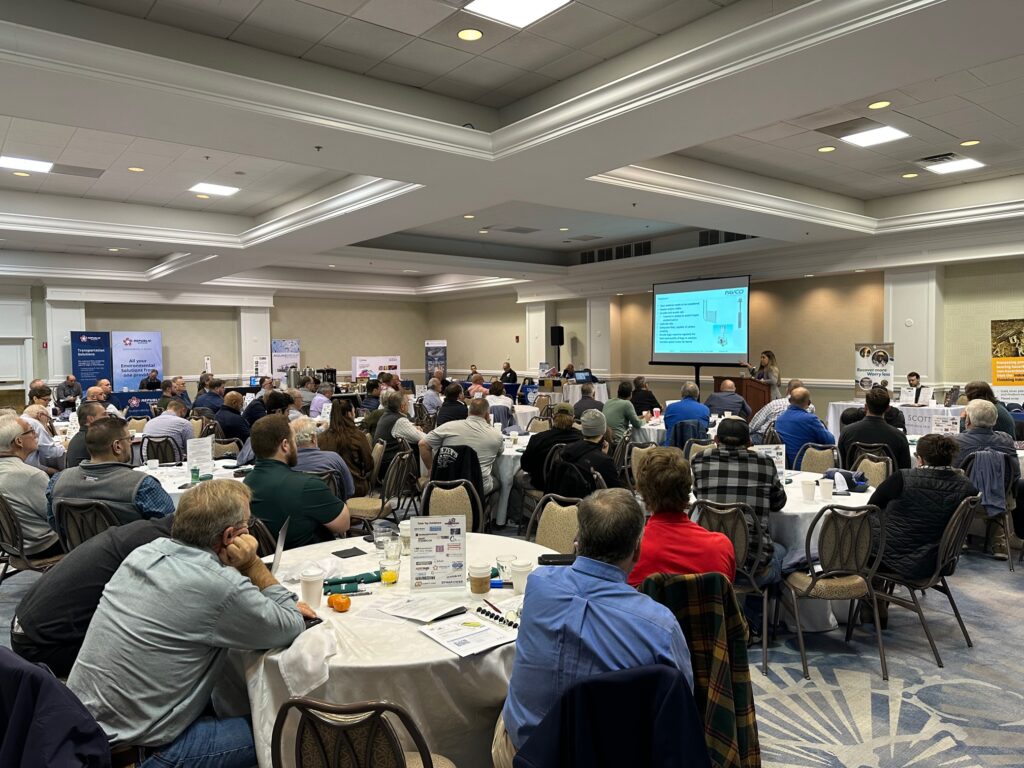
The New England Surface Finishing Regional took place this past November 3rd in Newport, Rhode Island. It was a huge success with a 120 people in attendance. There were speakers from all over the country that delivered educational and thoughtful presentations to all in attendance.

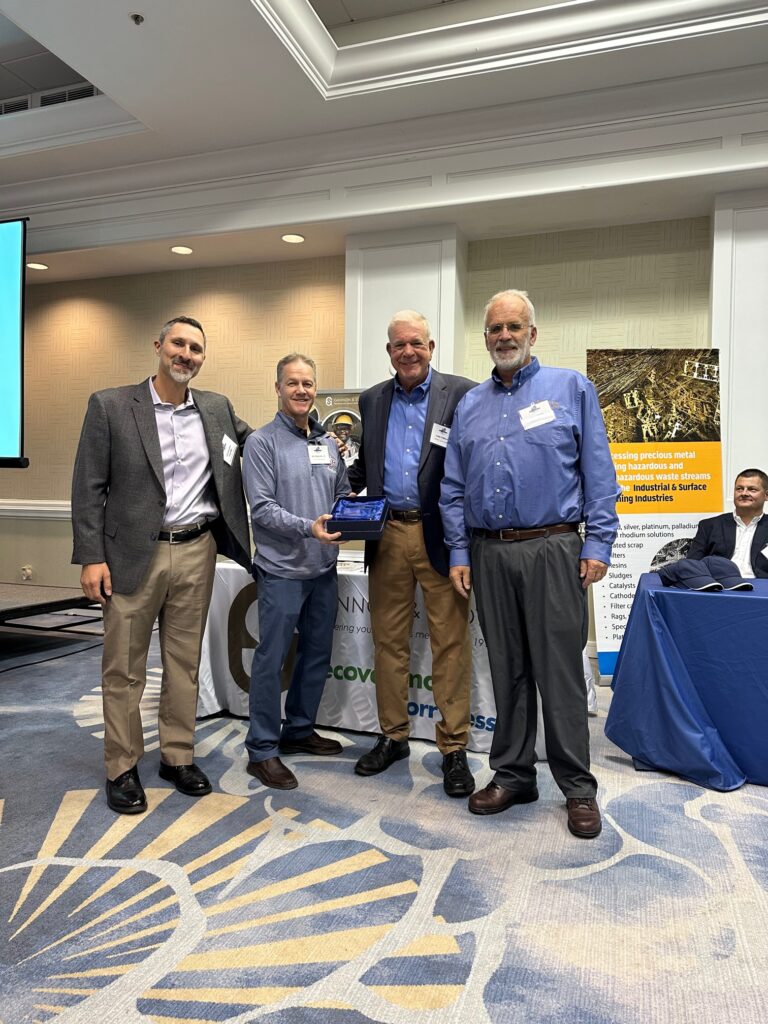
The New England Surface Finishing Regional is honored to have presented the 7th Annual Foundation Award to longtime supporter Alex Price of Luster-On Products. The award was created to recognize a metal finishing supplier that has demonstrated outstanding contributions, support, and dedication to the annual regional event.

The 2024 the New England Surface Finishing Regional will be held November 8th in Hyannis, Cape Cod Massachusetts.

Please continue to follow www.nensaf.org all year for news and events throughout the New England metal finishing industry.


NEW ENGLAND CHAPTER HOSTS ANNUAL VIRTUAL FALL SEMINAR

Date: October 4, 2023
Category: Chapter News, Events, Member News, NASF Chapters, NASF National, Regulation

NENASF LOGO

The New England Chapter of NASF hosted a virtual seminar for the benefit of their membership and the entire non-NENASF metal finishing community. The event was held on Wednesday September 13, 2023.  The event was presented free of charge to NENASF members, and at a modest fee for other interested parties, as an educational and bonding opportunity for the metal finishing community.


The Webinar was conducted by means of Zoom format and attracted about forty attendees. It was made up of three segments featuring three presenters over a two-hour period from 10:00am to 12:00 pm offering a user-friendly format for all attendees. In addition to offering vital regulatory and technical information the event also made available two Continuing Education Wastewater Treatment Operator Contact Hours needed for WWT Operator License renewal.


Ethan Ware of Williams Mullen Law Group opened the Webinar with a presentation on the upcoming EPA PSFAS Survey that will be sent out to nearly 2000 metal finishers this fall. He stressed that the demographics would not only include chrome platers but chromate conversion coaters as well. This is a very detailed Survey and asks many complex questions through eight sections over seventy-one pages. He covered the answering/data requirements both from a technical as well as a legal perspective. He very much stressed that the information gathered in this Survey will shape the future of Wastewater Discharge Permits for years to come.

This was followed by a presentation by Jeremy Riley of Omega Research giving a detailed description of how proper finishing specification required test sample preparation can make a difference in acceptable test results, while poorly prepared samples can fail causing ripple effects with customer job acceptance.

The webinar was concluded with a presentation by Tony Oriti on Zinc-Nickel and Zinc-Tin as an alternative to Cadmium Plating. Tony not only presented the latest technological advances in these two finishes as they try to replace a long-time exceptional performing and defense and aerospace specified finish, cadmium, but also gave the attendees a look at emerging technology in the form a triple alloy finish that is in the developmental stages.


Once again we want to give special thanks to Chris Capalbo for moderating, and to Dev Massimi and Ralph Capalbo as Program Speaker Facilitators for their contributions, and to the combined efforts of NASF Board Members, Committee Members, Chapter Membership and dedicated and talented members of the Metal Finishing Community as a whole for making events such as this available for the benefit of our membership.

MCTA Members Meeting &  Program

Date: June 5, 2023
Category: Events, Regulation

MCTA

Registration Open

Pre-Approved for 2.5 CE Credits

Season Opener – Do You Have Your [Regulatory] Bases Covered?

Speaker:

This & That: A Regulatory UpdateBrian Morrill, Associate Principal, GZA

Panel Discussion Speakers:

ModeratorAtty: Robert Cox Bowditch & Dewey

Speakers

Chris Rascher, EPA Region 1, TRI Compliance & Program  Coordinator

Stephen Klosz, MassDEP, Central Region Compliance Enforcement Analyst

When: June 15, 2023, 10 AM -12:30. Lunch to Follow

Where: DuPont Electronics and Industrial
New England Manufacturing and Technology Center
455 Forest Street, Marlborough, MA

Cost (Hybrid & In-Person): $50 Members, $100

Pre-registration required

To register for this event, please contact Katherine Robertson at katherine@masscta.org or 508-572-9113

CLICK HERE FOR MORE INFORMATION

Reminder: MCTA’s PFAS Strategy Group Meets Thursday, June 1, 11 a

Date: May 31, 2023
Category: Events, Regulation

Contact us for Access Information

At some point in the near future, the Legislature is expected to hold hearings on House Bill 2197 and Senate Bill 1356, both entitled “An Act to protect public health from PFAS.”

There is enormous traction behind moving PFAS legislation in the 2023-2024 session. Of the many PFAS bills filed, we believe H2197/S1356 have the best chance of passage.

MCTA’s goal through the strategy sessions is to develop a roadmap highlighting the major issues of concern, alternative approaches, and the unintended consequences of the sweeping legislation on public safety, human health and the economy. It will guide us when crafting testimony, meeting with Public Health Committee members, and House and Senate Leadership

Our first Planning Session is June 1 at 11. If you haven’t already signed up, please email Katherine Robertson at katherine@masscta.org for access information.

NENASF SPRING SEMINAR

Date: April 14, 2023
Category: Chapter News, Events, NASF Chapters, Regulation

Spring Seminar

Wednesday May 10th, 2023

Annual Training Seminar

DOT HAZMAT and RCRA

Hazardous Waste Training

Continuing Education Opportunity

WWT Contact Hours

Presentation Topics:

DOT HAZMAT AND RCRA HAZARDOUSE WASTE TRAINING SEMINAR

DAVID S. WEBSTER, CSP OF HRP ASSOCIATES

(Click here for Bio Information)

DOT HAZMAT AND RCRA HAZARDOUS WASTE TRAINING

David Webster will present a comprehensive mandatory DOT Hazmat and RCRA seminar designed to provide both entry-level and experienced environmental managers with a thorough review of state and federal hazardous materials and hazardous waste regulations. The four-hour seminar is designed to assist industry in meeting their triennial Dot and annual RCRA training requirements. Regulatory examples and case histories will be used during this seminar to emphasize and reinforce aspects of the hazardous waste regulations. As required by statute, a written exam will be given at the conclusion of the DOT Hazmat presentation to ascertain the attendees complete understanding of the course materials and requirements.

LUNCH / REGISTRATION FROM 12:00pm to 1:00pm

SEMINAR FROM 1:00pm to 5:00pm

 COURTYARD BY MARRIOTT

BOSTON MARLBOROUGH

75 Felton Street

Marlborough, MA. 01752

Cost:

Members: $100 per person

Non-Member: $200 per person

We have applied for

Massachusetts

4 Wastewater Treatment Contact Hours (TCHs)

for this Seminar


CLICK HERE TO REGISTER!

Government and Industry Affairs Update – Available in our NENASF Member Login

Date: April 7, 2023
Category: Member News, NASF National, Regulation

NASF Logo

Invest and participate in the NASF Government Affairs program.

 This highly effective public policy effort directly impacts decisions affecting finishing; it also produces direct savings to your company as a result of its education outreach at the state and national levels, and internationally.

Your membership generates a solid return on investment and supports essential programs to advance surface technology, nationally and worldwide.

The leaders in our industry understand the advantage of aligning themselves with NASF, which connects them to the people and information needed to leverage their resources to greatest advantage.

NASF Public Policy Update – February 2023

Date: February 28, 2023
Category: NASF Chapters, NASF National, Regulation


This month, NASF has been closely engaged with federal regulators on a full slate of policy challenges emerging in 2023. Among the immediate advocacy priorities for the industry are the US Environmental Protection Agency’s first-of-its kind PFAS rule for the finishing industry, the agency’s soon-to-be-released nationwide mandatory survey for finishers on PFAS in facilities’ wastewater, new Superfund liability-forcing federal chemicals regulations and California’s proposed hexavalent chromium ban for both decorative and functional applications.


In the divided Congress, lawmakers are challenged to find common ground on enacting even “must pass” legislation this year. However, key congressional committees are now organized and are exercising a wide-ranging set of oversight hearings on the difficulties faced by manufacturers as the Congress and the White House press to re-shore US industry and implement ambitious “Buy American” initiatives. In the meantime, the Biden Administration is accelerating its ambitious regulatory agenda through new rules and other executive actions.


A summary of pertinent current topics for the industry is below:


Federal Issues:

·     EPA Pushes Back Timeline for Proposing Metal Finishing PFAS Effluent Limits – The proposed new metal finishing standards to address PFAS is now being pushed back from August 2024 to December 2024. NASF is discussing with EPA staff the agency’s pending survey of the industry, which will likely be sent to finishing companies by April 2023.

·     OSHA, DOT and EPA Civil Penalties are Increasing in 2023 – The Department of Labor recently revised civil penalty amounts for OSHA violations by employers, per an earlier authorization by Congress. The Department of Transportation has also increased civil penalties for all modes of transportation, including highway, by 7.745 percent. EPA’s new maximum penalties are now highest for Clean Air Act violations at $117,468 per day

·     EPA Releases Draft IRIS Assessment for Cobalt – EPA recently released its draft plan to assess the cancer potential from inhalation of cobalt that takes a “no safe-level” approach inconsistent with other available science.


State Issues:

·     NASF Highlights Finishing Industry’s Accomplishments in Response to California Air Board’s Proposed Ban on Hexavalent Chromium – Industry leaders in a recent hearing in California highlighted key reasons for state air authorities to chart a different path than phasing out all hexavalent chromium electroplating and anodizing.

·     New York State Enacts Law that Requires Environmental Justice Cumulative Impact Analysis – A new law will require a thorough review of the cumulative impacts of pollution on certain disadvantaged communities before an environmental permit is issued or renewed.


For more details on each of these topics, see the expanded discussion below.


EPA Pushes Back Timeline for Developing PFAS Effluent Limits


EPA’s Office of Water has just announced it will delay its proposed PFAS discharge rule for the finishing industry by several months, from its initial August 2024 target to December 2024.


As NASF has continued to discuss key aspects of the rule with EPA, a coalition of 17 environmental groups that includes Environmental Working Group (EWG), Sierra Club and Natural Resources Defense Council had earlier urged EPA to quickly promulgate new controls for the entire metal finishing industry, not only chrome plating operations.


NASF most recently provided input to EPA officials on pending industry data collection efforts. The agency’s mandatory survey associated the rule is still expected to be sent out the chromium plating facilities shortly, likely by April 2023. If you have any questions or would like additional information regarding this issue, please contact Christian Richter or Jeff Hannapel with NASF at crichter@thepolicygroup.com or jhannapel@thepolicygroup.com.


Reminder: OSHA, DOT and EPA Penalties Recently Increased Penalties


As a reminder, the Department of Labor has revised civil penalty amounts for OSHA violations by employers, per an earlier authorization by Congress to keep up with inflation. Maximum penalties for serious and other-than-serious violations have increased from $14,502 to $15, 625 per violation. For willful or repeated violations, maximum penalties have increased from $145,027 to $156,259.

The Department of Transportation has also increased civil penalties for all modes of transportation, including highway, by 7.745 percent. The increases apply to dozens of Federal Motor Carrier Safety Regulations and Hazardous Materials Regulations violations, including violations related to:

·      Out-of-service orders

·      Recordkeeping

·      Non-recordkeeping

·      Hazardous materials regulations

·      Commercial regulations

·      Operating authority requirement

·      Tariffs

·      Loading and unloading

·      Evasion of U. S. Codes

·      Reporting and recordkeeping


Finally, the EPA has increased maximum civil penalties for environmental violations as follows:


2022 2023
Clean Air Act (CAA) ‎$109,024‎ $117,468
Clean Water Act (CWA) ‎$59,973‎ $64,618
Superfund and Right-to-Know (CERCLA/EPCRA) ‎$62,689‎ $67,544
Safe Drinking Water Act (SDWA) ‎$62,689‎ $67,544
Toxic Substances Control Act (TSCA) ‎$43,611‎ $46,989
Insecticides, Fungicides, and Rodenticides (FIFRA) ‎$21,805‎ $23,494


EPA Releases Plan for New Health Risk Assessment for Cobalt


The agency recently released its draft plan for an extensive new health evaluation for cobalt inhalation and will focus its assessment on water-soluble and water-insoluble cobalt compounds.

EPA officials indicated that it plans to carry out a cancer assessment that will likely be more stringent and generate new risk values that could drive additional future restrictions on cobalt use, much like the current hexavalent chromium evaluation under review by the agency.

The agency also recently announced a public meeting in January to discuss several matters related to its approach on inhalation risks from cobalt, including scientific complexities associated with the effort.

If you have any questions or would like additional information regarding this issue, please contact Christian Richter or Jeff Hannapel with NASF at crichter@thepolicygroup.com or jhannapel@thepolicygroup.com.


NASF Highlights Finishing Industry’s Accomplishments in Response to California Air Board’s Proposed Ban on Hexavalent Chromium


On January 27, 2023 the California Air Resources Board (CARB) held a public meeting in Riverside, California on its rule to phase out hexavalent chromium plating.

The industry noted the rule is unnecessary based on:

·     the industry’s exemplary achievement in reducing air emissions by 99.7 percent since 1995 and its commitment to continued stewardship and environmental excellence;

·     the miniscule contribution of the industry to Cr6 emissions vs the total of all other industry-based sources;

·     the already strict state air emission requirements in place for the industry and new controls contemplated by the rule;

·     the continued industrial customer demand and specifications for Cr6 applications into the future;

·     the industry’s interest in pursuing a less onerous path to transition away from Cr6.

The new rule would impose the following new requirements.

·     January 1, 2024 — The new rule would prohibit any new permits for chromic acid anodizing and hard or decorative chromium electroplating facilities.

·     January 1, 2026 — Hard chromium and chromic acid anodizing facilities would have to implement control requirements to meet stringent air emissions limits.

·     January 1, 2027 – All existing decorative hexavalent chromium would be prohibited.

·     January 1, 2039 – All existing hexavalent chromium functional plating and chromic acid anodizing would be prohibited.


Industry Testimony


Nearly 70 industry representatives and company employees testified at the public meeting urging CARB members to rescind or revise the rule to avoid job losses and negative economic impacts on surface finishing facilities in California. NASF participated in the public meeting and provided testimony on behalf of California company members.


Many from industry cited the near zero level of hexavalent chromium emissions from chromium plating and anodizing operations – particularly for decorative chromium applications – compared to other sources of hexavalent chromium. Others noted that decorative hexavalent chromium plating remains an important tool to meet customers’ corrosion and other product performance demands and specifications.


An additional theme of the varied testimony highlighted the fact that surface finishing facilities in California are subject to the most stringent hexavalent chromium emissions regulations in the country. NASF members urged CARB to implement new, even more stringent emissions-based limits rather than banning hexavalent chromium plating and anodizing.


Board Response


Based on the arguments raised in the testimony, several individual CARB members expressed concerns about the smallest facilities with the smallest emissions profile facing the earliest ban, the extremely low emission profile of decorative plating, the necessity for more time for decorative plating to transition to alternatives, and the need for emission-based limits for plating facilities.


The Board requested that industry provide staff with additional information on products, such as medical equipment, that still require decorative hexavalent chromium plating to meet customer specifications and product demands.


Industry Follow-Up and Rulemaking Schedule


In response to CARB staff’s request for additional information, the NASF California Chapters and NASF submitted a letter to Board staff on February 10, 2023. The industry continues to engage CARB members and staff on these issues. Board staff is expected to respond to the letter and/or prepare new rule language for the full Board to consider by mid-March. A final vote on the rule language is scheduled for May 2023. A final rule is expected to be completed and issued by summer 2023 and become effective January 1, 2024.


If you have any questions or would like additional information about the CARB rule and the public meeting, please contact Jeff Hannapel with NASF at jhannapel@thepolicygroup.com.


In the States: New York Becomes Second State to Require Environmental Justice-Focused Cumulative Impact Analysis


New York Governor Kathy Hochul signed New York’s “Cumulative Impacts” bill into law in December, making New York the second state in the nation to require assessment of “cumulative impacts” affecting certain communities before an environmental permit is issued or renewed.

This is approximately two years after New Jersey passed similar “cumulative impact” legislation. The New York law appears to have a blanket prohibition on issuance or renewal of environmental permits to all facilities which might contribute to further impact on “disadvantaged communities.”


Environmental Justice and Cumulative Impact Analysis 


The new law requires analysis of “cumulative impacts” on “disadvantaged communities” before a permit is approved or renewed.  “Disadvantaged communities” are defined as “communities that bear burdens of negative public health effects, environmental pollution, impacts of climate change, and possess certain socioeconomic criteria, or comprise high-concentrations of low- and moderate- income households.”


Facilities operating in these “disadvantaged communities” would be required to prepare “existing burden reports” containing baseline environmental monitoring data collected within the past two years and information identifying the following:

·     each existing pollution source or categories of sources affecting the community;

·     the potential routes of human exposure to pollution from each source or categories of sources;”

·     ambient concentration of regulated air pollutants and regulated or unregulated toxic air pollutants;

·     traffic volume;

·     noise and odor levels;

·     exposure or potential exposure to lead paint;

·     exposure or potential exposure to contaminated drinking water supplies;

·     proximity to sources like solid or hazardous waste management facilities, wastewater treatment plants, hazardous waste sites, incinerators, recycling facilities, waste transfer facilities and petroleum or chemical manufacturing, storage, treatment or disposal facilities;

·     the potential or documented cumulative human health effects of the pollution sources; and

·     the potential or projected contribution of the proposed action to existing pollution burdens in the community and potential health effects of such contribution.


Notably, “[n]o permit shall be approved or renewed by the department if it may cause or contribute to, either directly or indirectly, a disproportionate or inequitable or both disproportionate and inequitable pollution burden on a disadvantaged community.” New York state regulators would make this determination as part of a rulemaking and public participation process to be established later this year.


NASF 1000


The NASF 1000 program was established to ensure that the surface finishing industry would have resources to effectively address regulatory, legislative and legal actions impacting the industry, NASF members and their workplaces. All funds from the NASF 1000 program are used exclusively to support specific projects and initiatives that fall outside the association’s day-to-day public policy activities. The commitment to this program is one of the most vital contributions made in support of surface finishing and directly shapes the future of the industry.


The sustained commitment from industry leaders has helped the NASF remain strong and credible in informing regulatory decisions across the nation. Specific projects funded through the NASF 1000 make a measurable difference in how the industry navigates emerging challenges, communicates credibly with policy makers, and advocates for a strong science base for rules or standards that affect surface finishing.


Please consider supporting the NASF 1000 program. If you have any questions or would like additional information regarding the NASF 1000 program or the broad array of NASF public policy activities, please contact Jeff Hannapel with NASF at jhannapel@thepolicygroup.com.
MCTA UPDATE

Date: January 24, 2023
Category: Chapter News, Member News, Regulation

 Legislation Proposes Bans on Most PFAS-Containing Products
Language Also Requires Testing for Presence of Unintentionally Added PFAS
Amends Groundwater & Surface Water Discharge Permits
Allows for Temporary Exemptions for “Unavoidable Use.”
Comprehensive legislation has been filed in the Massachusetts House and Senate addressing the sale, use, and cleanup of PFAS and PFAS-containing products in the Commonwealth.

The legislation, the result of several year’s worth of work by the PFAS Interagency Task Force, defines PFAS as any product that “contains at least one fully fluorinated methyl or methylene carbon atom.”

The legislation is defined by its docket number, and has not yet been assigned a bill number.

MCTA has not yet completed a thorough review of the legislation, but a few quick highlights:

  • HD 3324 states : No manufacturer, distributor, wholesaler, or retailer shall offer for sale, sell, or distribute in the commonwealth any products to which PFAS has been intentionally added. The term “product” as defined in the legislation includes children’s’ products, consumer products, cookware, fabric treatments, personal care products, product components, or products labels. The Legislation also bans any “avoidable” use, but creates an exemption for unavoidable uses. That exemption must be granted by MassDEP and will be granted only in three year intervals;
  • HD 3324 states “No manufacturer shall sell, offer for sale, distribute for sale, or distribute for use in the Commonwealth food packaging to which PFAS has been added for any purpose;”
  • The legislation calls for MassDEP to amend its groundwater discharge permits with requirements for quarterly monitoring and reporting of PFAS;
  • The legislation calls for MassDEP to amend both the surface and groundwater discharge permits to industrial permittees with requirements to implement best management practices for discharges of PFAS, including, but not limited to (i) product elimination or substitution when a reasonable alternative to PFAS is available in the industrial process; (ii) accidental discharge minimization; and (iii) equipment decontamination where PFAS-containing products have historically been used.
  • The bill establishes a PFAS Remediation Trust Fund which would be populated by the commonwealth’s claims arising from the manufacture, marketing and sale of PFAS-containing aqueous film-forming form and other sources.

This above is an abbreviated synopsis of key parts of the proposed legislation. This is also the first step in the legislative process. Environmental advocates will push for a more comprehensive bill and immediate action. Industry must be prepared to present its own position on the bill and how it impacts industry in Massachusetts. HD3324 is just the first step.

During the upcoming week, I will be bring members up to speed and provide a more thorough evaluation of the impact of this package.

Please contact Katherine Robertson at katherine@masscta.org or by phone at 508-572-9113 if you want to weigh in or if you have any questions.

MassDEP Releases Air Permitting Regulations for Public Comment

Date: January 5, 2023
Category: Regulation

MCTA

MassDEP Releases Air Permitting Regulations for Public Comment

MCTA Schedules Member Strategy Session for January 6th

New Addresses/Phone Numbers for MassDEP

Welcome to 2023!

On the Friday before New Year’s, MassDEP unveiled its draft regulations for cumulative impact analysis for comprehensive plan approvals. (In MassDEP’s defense, it was required to complete the draft by the end of 2022.) The Public comment period is now open and runs through April 7.

MCTA has scheduled a members’ meeting/strategy session to discuss the regulations and their impact on industry for this Friday, January 6, at 11 am. Please note, the new regulations will impact only CPAs, major and non-major source.

CIA Draft Regulations

Jan 6, 2023, 11:00 – 11:45 AM (America/New_York)
Please join my meeting from your computer, tablet or smartphone.
https://meet.goto.com/144172389
You can also dial in using your phone.
Access Code: 144-172-389
United States: +1 (224) 501-3412
Get the app now and be ready when your first meeting starts:
https://meet.goto.com/install

On another note, if you have MassDEP employees on speed dial, you may want to double check their numbers (and their addresses.) MassDEP has moved several of its offices and changed the contact information for many of its employees. Check here for new locations/contact information.

As always, if you have any questions, contact Katherine Robertson at katherine@masscta.org

Older posts Newer posts